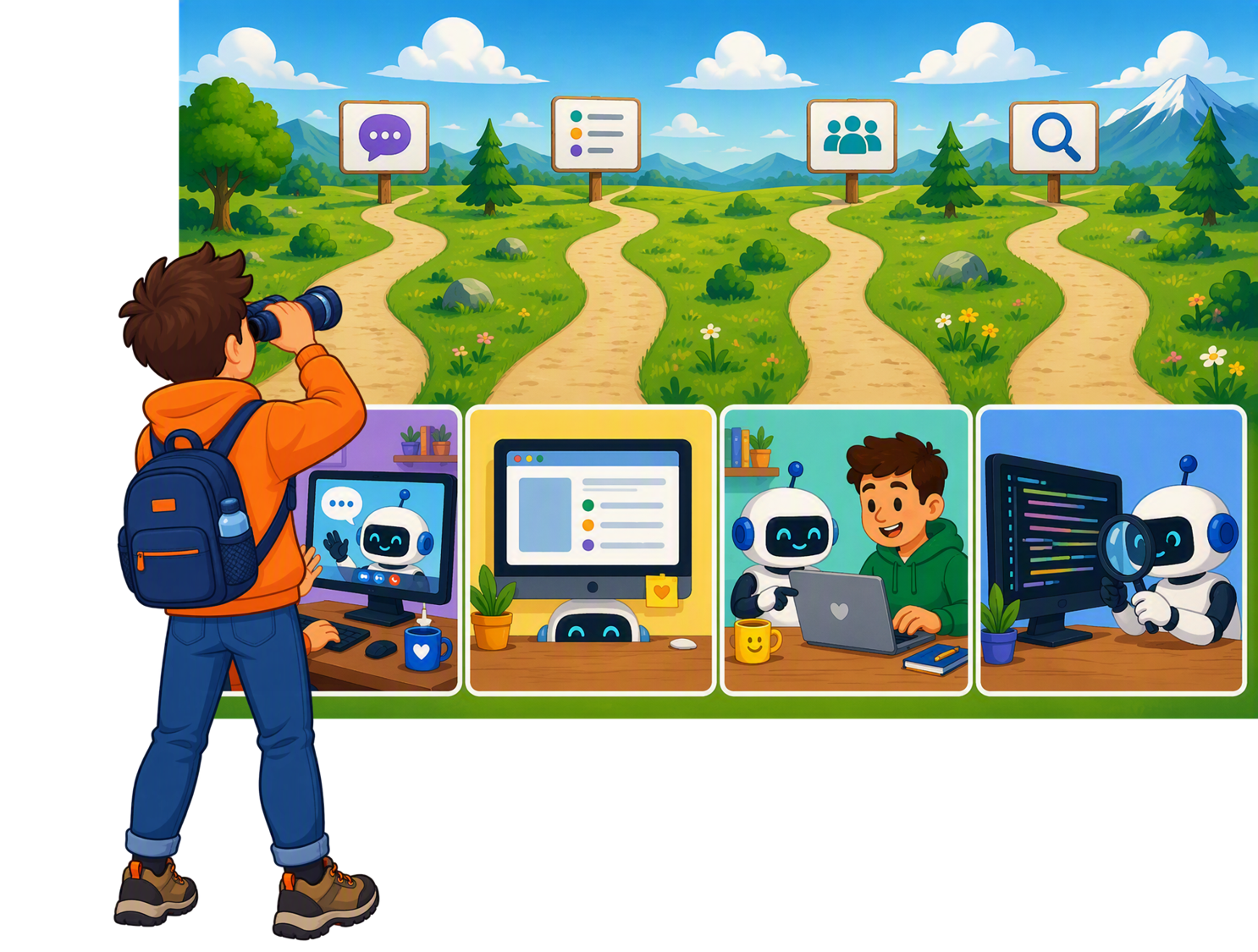
The promise and opportunity of AI cannot be overstated. Businesses are able to leverage automation and insights at never seen before levels… better yet – these opportunities are quickly becoming commoditized and available to businesses of all sizes. It’s important however, to not anchor around one approach or strategy. I’ve found many organizations that start down the AI journey and end up thinking about it only in the area where they start. Or worse, they place where they start – ends up owning all of the AI strategy and then anchoring all solutions around a single idea. These companies should be thinking of at least 4 paths independently of each other.
Each path deserving of its own roadmap, considerations and effort. Each has it’s own tradeoffs and benefits and must be considered independently, but of course, experience in one area does help inform the others.
4 primary paths for AI in your business:
- AI is the Product
- AI in the Product
- AI to build the Product
- AI to run the Product
AI is the Product.

This is where most companies start. It’s the fastest and easiest to implement – unless you want to build this yourself. Plenty of turn-key solutions and platforms exist for building intelligent chatbots and voice agents. Take a look at 11 Labs, Deepgram, Retell AI, and Twilio. Several telephony and CRM companies are now integrating AI/workflow products directly in their offerings.
Examples of this are chat bots, voice AI and other scenarios where the customers interact directly with the LLM models via a custom harness. Please see Ring Central and Five9 as examples.
AI in the Product

This is where things get powerful. You are building your application for your needs. Think of the scenarios that traditionally needed a human in the loop – often these can be supplemented with AI in the loop. This requires a much higher level of monitoring and performance checking. These integrations are often not obvious – but they can be extremely powerful!
Examples I’ve seen: filtering a contact import to exclude “non people”, deciding on next step needed step in a complex workflow, generating most likely response for a given scenario, accelerated on boarding in a tedious process, even features like “fill in the missing background” in products like Photo Shop and many others are non-obvious but powerful integrations.
Not all automation needs to be “smart” automation, but the opportunities here are continuing to grow. This is where platforms like Azure AI Foundry and Amazon Bedrock, and Ollama Cloud really shine – allowing you to centralize the hosting and management of multiple models and quickly swap out one model for another based on your needs and scenarios. Considering when and if to self-host open models leveraging the LLaMa platform should also be on your radar.
AI to build the Product (and other productivity tools)

This is where most developers – and even most conference talks tend to focus. With tools like Claude Code, SpaceX Codex, Cursor, GitHub CoPilot and Code Rabbit. These tools to accelerated building, multi-agent driven agentic processes continue to grow and grow.. the company token spend shows the increasing level of investment (and need to manage this from a FinOps perspective)
This is also where I put productivity AI tools (think AI for information workers) like Microsoft CoPilot, Anthropic Claude Cowork and Perplexity. These tools help with evaluating documents, generating creative assets and document review and feedback.
Candidly these are the tools where most companies see the biggest productivity gains – and where they probably have some of the largest blind spots. LLMs are great at sounding correct. 🤪
AI to run the Product
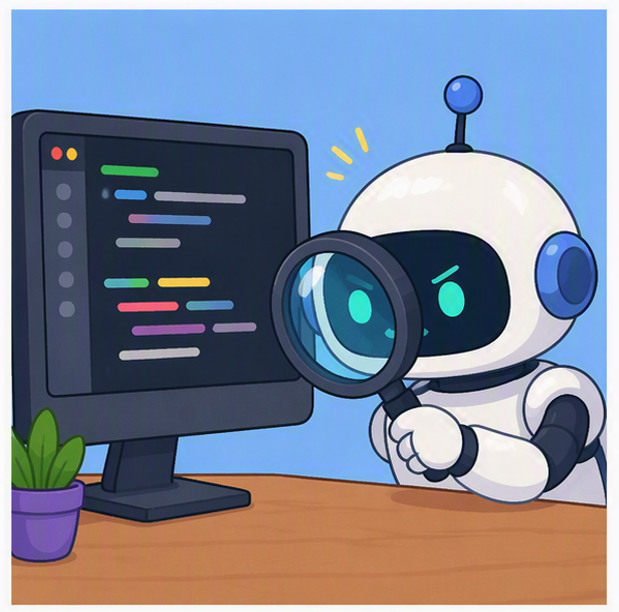
This is an area where many companies are missing out. Too many are used to traditional SRE roles and responses. LLMs – when given access to the logs, alerts and source control are often able to identify, find and correct real time issues rather quickly.
We’re starting to see glimpses of this future with tools like GitHub CoPilot participating directly and creating pull requests, that other agents can even review and approve. Milan has a nice example he wrote about using HoneyComb.io
Other tools like Harness are now directly integrating AI tooling into their pipelines and automations. On the observability front, we seeing tools like Data Dog take this front and center with their Bits AI agents. It truly is an exciting world that we’re stepping in to!
What’s Next
As with traditional software, the key to going fast, is going well. Maintaining the proper safe-guards and bumpers in place. Helping an entire product team to move together and not getting bogged down with “how we used to do things”. Things will change – and some things will continue to remain. This new world has never been an either-or, it’s always been a yes-and. What does that mean? It means the core tenets of what allows companies to run at speed – automation, safety, quality, innovation – vastly remains the same, but how we implement those principles is now supercharged with new skills, tools and opportunities to lean on.
I plan on digging a little deeper into each of these areas in the coming weeks – I hope you’ll join me for the journey! I’d love to hear more about your experiences in these 4 areas – what’s working, what has completely flopped – what areas of AI are you exploring outside of these 4 paths? Let me know over on LinkedIn – I look forward to connecting with you!
Join the conversation on LinkedIn.
Update (10/14/26) – added the HoneyComb.io example from Milan